что ты ищешь?

Expanding exhaust packing and loose fill are two ways of putting an acoustic fiber charge into a silencer. A heat-released sheet carries the fiber into the assembly in a compact, restrained form. Loose fill is measured and distributed during filling. The better production route depends on access to the chamber, control of the fiber quantity and how the completed assembly is validated.
For an OEM exhaust manufacturer, compare the complete filling process rather than asking which material looks fuller before the shell is closed. An expanding sheet has an initial installation condition and a later released condition. A loose-fill process needs a defined method for placing material throughout the intended cavity.
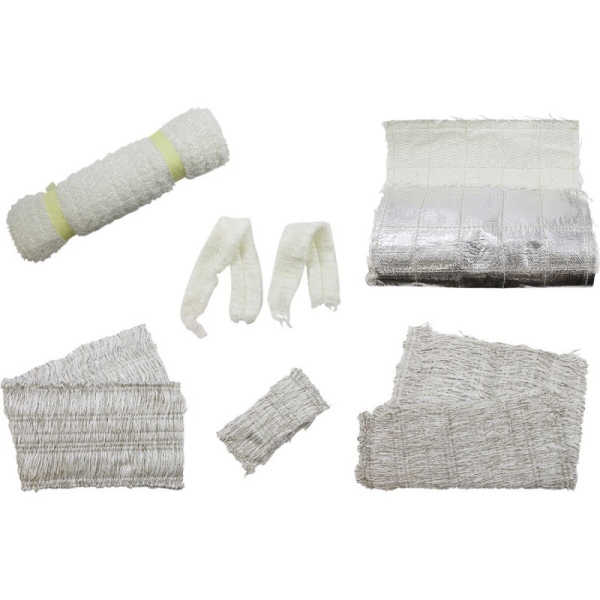
BSTFLEX supplies the Exhaust Baffle Silencer Packing Sheet, made from compressed, texturized continuous-filament glass yarn held by low-melting-point stitching. The comparison below focuses on selecting a filling route for an existing or new silencer program.
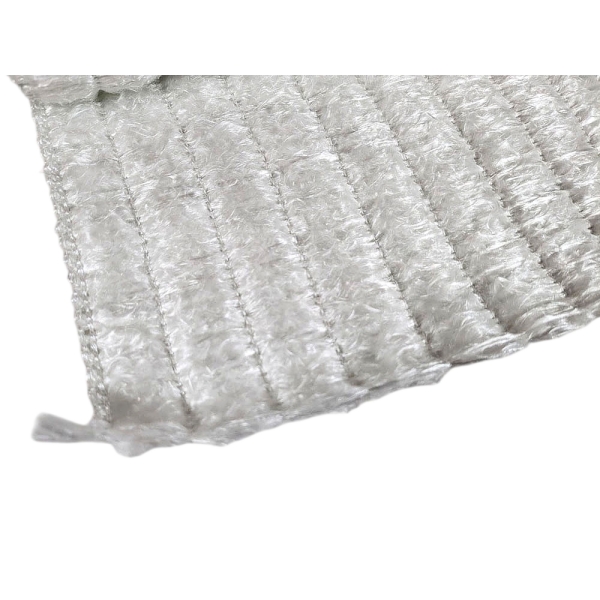
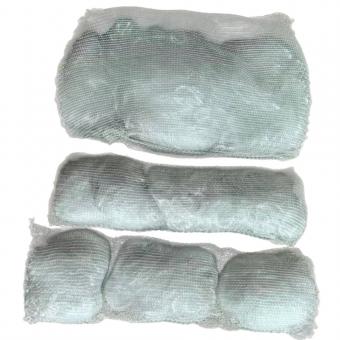
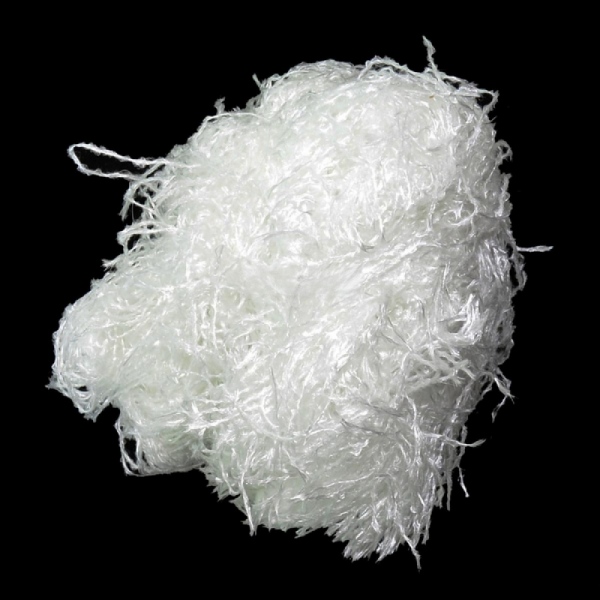
Loose fill muffler packing is not a complete material specification. Identify whether the quotation covers chopped fiber, prepared continuous-strand material or another defined construction. Do not assume that everything supplied without a stitched sheet has the same fiber length or handling behavior.
Also distinguish supplied loose fiber from equipment-based direct filling. A direct-filling system may meter fiberglass strands from a supply package and introduce them through a nozzle. That process is not the same as manually placing fiber taken from a bag.
For a useful comparison, identify the proposed sheet and the existing feedstock, then describe the operations performed on each. A controlled machine-filling process should not be represented by an example of unweighed hand filling.
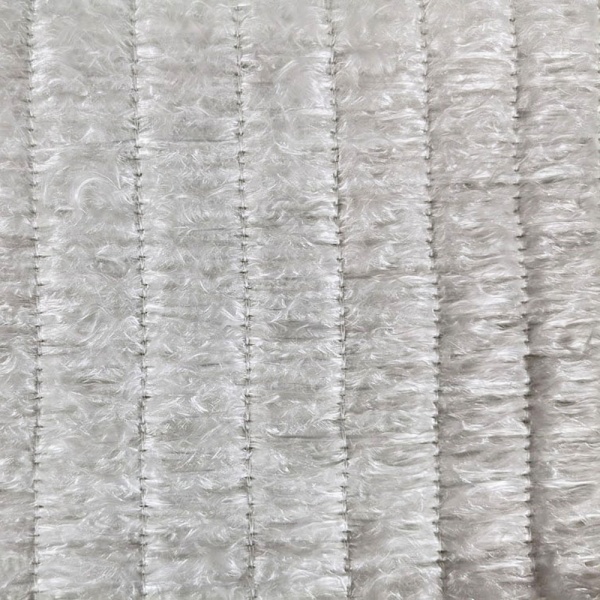
In an expanding muffler packing sheet, temporary stitching restrains the bulked glass yarn for handling. Initial heating releases that restraint so the fiber structure can open within the space allocated to it. The release changes the fiber arrangement; it does not create additional glass fiber.
Loose material is distributed during the filling operation. Depending on the specified construction, it may also settle or change during service, but the term loose fill does not identify the deliberate heat-release mechanism used in the stitched sheet.
This creates a practical difference in inspection. Sheet placement before heating and fiber distribution after release are separate acceptance points. A successful cold fit is not evidence that the released material reaches every intended part of the chamber.
For the mechanism itself, see how heat-released fiberglass sheets fill a silencer.
| Process Question | Heat-Released Packing Sheet | Loose or Direct Fiber Filling |
|---|---|---|
| What enters the assembly? | A defined piece of compact, restrained fiber material. | A measured fiber charge introduced by the specified manual or machine process. |
| How is the quantity controlled? | By the material specification, usable cut area and agreed fiber weight. | By weighing or calibrated metering, with the delivered quantity verified. |
| What controls placement? | The cutting layout, wrapping or positioning method, and available release space. | The filling sequence, access route, tooling and distribution method. |
| What needs checking after heating? | Release, local distribution, retention and the condition of the complete assembly. | Distribution, retention and the condition of the complete assembly. |
| What must not be assumed? | That expansion compensates for an insufficient fiber charge. | That an unpackaged fiber automatically requires an uncontrolled manual process. |
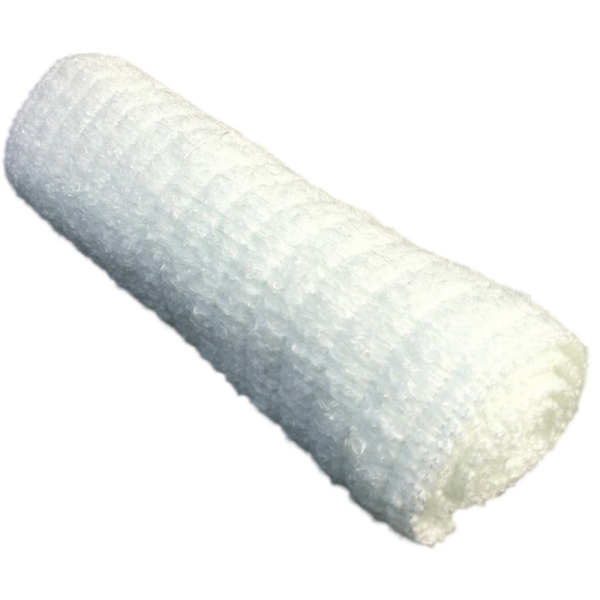
Consider an expanding sheet when the production sequence allows a measured cut piece to be positioned around the core before insertion. Trial the compact assembly through the actual shell, including its narrowest section, internal joints and end fittings.
Check whether the sheet remains in position during insertion and whether the selected fastening method permits its intended release. Record any trimming or rewrapping required at the station. These operations belong in the process comparison, even when the purchased material is described as ready to install.
Where the established process fills a partly closed chamber through a port or nozzle, examine how a sheet would enter that same cavity. A change to sheet packing may require a different assembly sequence rather than a simple material substitution.
Keep a validated direct-filling route in the comparison when the tooling and feedstock already suit the product. Review the delivered mass, distribution and process records before deciding whether changing the supply form addresses a real production problem.
Mark each zone on the cross-section and assign its filling quantity and placement method. Do not expect self expanding muffler packing in one compartment to supply fiber through a solid partition into another.
For an oval shell or offset core, inspect the narrow clearance and the wider pocket separately. The sheet trial should establish where the compact pieces sit and how they release. The loose-fill trial should establish how the charge reaches and remains in those same regions.
Use the observed distribution to compare the processes. Neither an irregular shell nor a large total cavity volume selects the filling method by itself.

A sheet-versus-loose-fill comparison can unintentionally change several variables at once: glass grade, filament construction, fiber quantity and core-side layers. Record those differences before interpreting a sound test or service trial.
When the objective is to isolate the filling process, keep the material and target fiber quantity comparable where practicable. When the proposed sheet introduces a different fiber system, evaluate it as a design change. Equal weight alone does not establish equivalence.
Likewise, continuous filament muffler packing does not always mean a heat-released sheet. Continuous fibers may be supplied in other forms or used in winding and filling processes. Specify the stitching and release behavior separately from the fiber description.
Use the required operating conditions to approve the fiber grade. A low-temperature release mechanism and a high-temperature service requirement describe different parts of the specification.
Compare dry acoustic fiber, not a complete stitched sheet against an unpackaged fiber charge without adjustment. Establish whether the quoted sheet weight includes temporary stitching or other incorporated materials.
For the filling process, distinguish material withdrawn from stock from material delivered into the silencer. Record offcuts, handling loss and unused portions separately. None of those quantities should be counted as installed acoustic fiber.
Do not reduce the approved fiber charge merely because the replacement sheet expands. Conversely, do not force additional material into a cavity solely to make the compact sheet look as full as a loose-filled assembly before heating.
The calculation method is covered in sheet sizing and filling weight for expanding exhaust packing. Use that guide to convert an approved charge into dimensions, then confirm the proposed layout by assembly trial.
Agree the conditioning procedure with the material and silencer suppliers before testing a heat-released sheet. Record the relevant measurement location and exposure conditions. A fixed engine-idling time is not a universal substitute for a material-specific release procedure.
After the prescribed cycle, examine whether the intended restraints released and whether the fiber occupies the assigned regions. Use a planned inspection sample or another agreed inspection method; do not infer internal distribution only from external shell temperature or exhaust sound.
Check any added tape, ties or bindings against the approved construction. Their purpose during assembly must not conflict with the required release. Keep permanent core protection and retaining components in place unless their removal is part of an approved design revision.
For both filling routes, follow the material safety information and the facility's handling, ventilation and hot-test procedures.
The following trial record separates production convenience from finished-silencer performance. Set the acceptance requirements before running the samples so that the preferred format is not selected from appearance alone.
| Trial Item | Record for Both Routes | Additional Sheet Check |
|---|---|---|
| Material input | Fiber identification, dry charge and surrounding layer arrangement. | Stitching specification and weight basis for the cut component. |
| Assembly | Preparation, placement, closure time and required rework. | Insertion fit and stability of the compact sheet before closure. |
| Internal distribution | Coverage in each designated packing zone using an agreed inspection method. | Distribution after the prescribed release cycle. |
| Acoustic result | Sound measurements under the same documented operating and test conditions. | Confirm the specified conditioning state before comparison. |
| Retention and service trial | Observed fiber migration, material loss and component condition after the agreed duty. | Check for restricted release or persistent gaps. |
| Production repeatability | Variation across the agreed sample set, not only one successful assembly. | Consistency of the cutting layout, restraints and released condition. |
Include pressure-loss measurements where the exhaust design requires them. A different filling form is not, by itself, evidence of lower backpressure, longer life or compliance with a finished-exhaust noise requirement.
Once both constructions meet the acceptance requirements, compare their cost per accepted silencer. Include purchased material, usable yield, preparation, filling or wrapping, closure, inspection and relevant equipment costs.
For sheet packing, measure the work needed to cut, weigh and position the piece. For direct filling, include the actual metering, handling and changeover process. Use observed production data rather than assuming a sheet always saves labor or loose fill always costs less.
A factory with several silencer variants may retain different filling routes for different products. The decision does not have to be a single material format for the entire production line.
No sound result follows from the supply format alone. Compare the selected fiber, installed quantity, distribution and complete silencer under consistent test conditions. Heat release is a filling feature, not a guaranteed decibel reduction.
Evaluate it against the required process controls. Weighed charges, defined placement instructions or equipment-based metering can be part of a production specification. The absence of a sheet does not establish poor repeatability.
Review the existing material, filling quantity, chamber access and conditioning requirements first. Silencer wadding is a broad description, not an interchangeability specification. Approve the proposed sheet in the actual assembly before repeat orders.
Use only the handling and conditioning method approved for that construction. Pre-expanding it changes the installation state being evaluated and may remove the practical benefit of supplying a compact sheet.
For an OEM muffler packing review, provide the silencer cross-section, internal dimensions, core geometry and assembly sequence. Include the current fiber specification and dry filling weight, or identify those values as development items.
Describe the problem the proposed change should solve: preparation time, access to an irregular cavity, inconsistent placement, material loss or another measured issue. Add sample quantities, expected production demand, packaging requirements and the planned acceptance tests.
For a heat-released sheet option, start with the BSTFLEX expanding fiberglass silencer packing sheet. Drawings and existing samples can support a review through our custom muffler packing manufacturing service.
Other exhaust silencer infill and packing formats are available for projects that need a different supply route. The purchasing objective is a controlled, validated filling process, whether the fiber enters the silencer as a compact sheet or through an established filling operation.
Request Expanding Exhaust Packing Samples for an OEM Filling Trial

No.10, Chuangxin North Road, Nanshan Park, Ningguo Economic and Technological Development Zone, Ningguo City, Anhui Province, China
тел/Whatsapp : 0086-15856303740
Эл. адрес : sales@bstbraidedsleeve.com
Skype : vanesa-cheng