что ты ищешь?
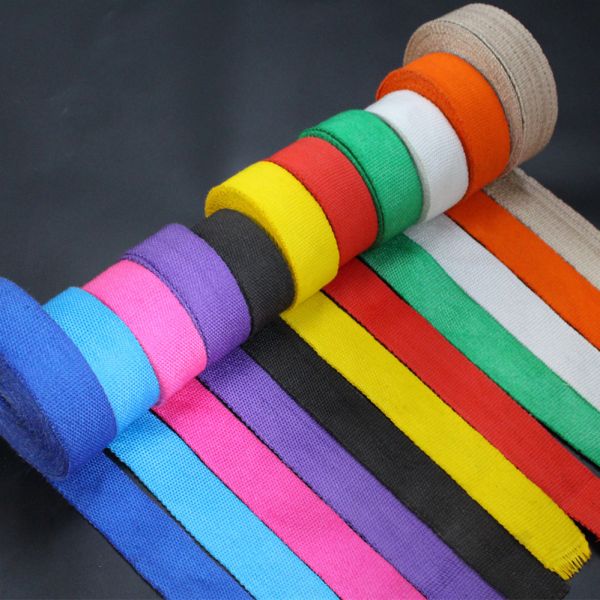
Fiberglass exhaust wrap is one of the most widely used forms of flexible thermal insulation for automotive headers, exhaust pipes, motorcycle systems and industrial exhaust lines.
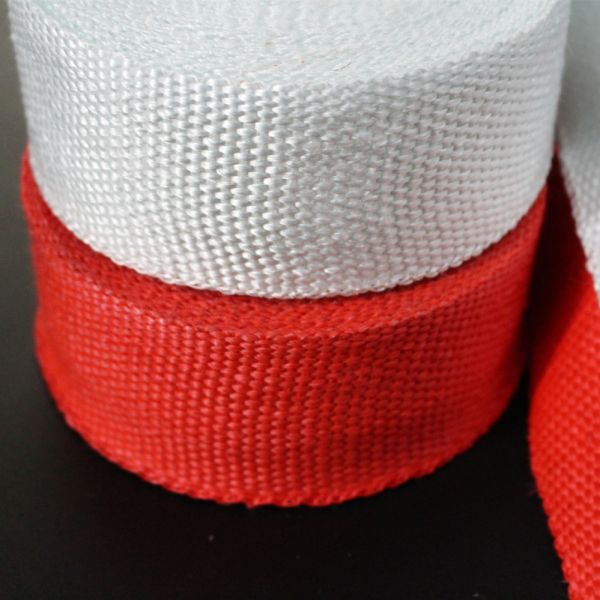
Also described as fiberglass exhaust heat wrap, fiberglass header wrap, fiberglass exhaust pipe wrap or glass fiber exhaust wrap, the material is woven into narrow tapes that can be wrapped directly around hot exhaust tubing.
BSTFLEX manufactures a range of exhaust and header heat wrap for automotive, motorcycle, racing, diesel and industrial thermal management applications.
For buyers, the important questions are not simply whether the wrap is fiberglass. Width, roll length, weave, coating, exhaust temperature, pipe diameter and installation geometry all affect the finished result.
Fiberglass combines several properties that make it practical for exhaust insulation:
good thermal resistance;
flexible woven construction;
easy conformity around tubes and bends;
relatively low material cost;
availability in multiple widths and roll lengths;
compatibility with automotive and industrial exhaust applications.
Compared with rigid shields, fiberglass wrap can follow complex pipe geometry without requiring a formed metal component.
This makes it especially useful around tubular headers, exhaust collectors and long pipe sections.
Fiberglass wrap is commonly selected when the application needs effective thermal containment but does not require the higher temperature capability of silica-based insulation.
A hot exhaust pipe transfers heat into the surrounding area by radiation and convection.
Wrapping the pipe with a woven fiberglass insulation layer reduces the amount of heat transferred directly toward nearby components.
Typical objectives include:
reducing radiant heat around the exhaust;
protecting wiring and hoses;
reducing heat exposure to body panels and floors;
improving thermal control inside an engine compartment;
reducing accidental contact with hot exhaust surfaces.
The wrap is installed directly around the pipe in an overlapping spiral.
The final thermal performance depends on the material, thickness, overlap, exhaust temperature and installation quality.
Headers are one of the most common applications for fiberglass exhaust wrap.
Tubular headers create a large hot surface area and often run close to:
ignition wires;
hoses;
brake components;
electrical connectors;
intake components;
body structures.
A flexible fiberglass header wrap can follow individual primary tubes and collectors more easily than many rigid insulation systems.
For complicated header geometry, narrower wrap is generally easier to install.
Long exhaust pipes and downpipes often benefit from wider wrap.
A fiberglass exhaust pipe wrap can be installed on:
straight exhaust tubing;
collector pipes;
downpipes;
tail sections;
diesel exhaust lines;
generator exhaust pipes.
Straight sections are generally faster to wrap than complex headers because less material adjustment is required around bends.
For large industrial exhaust pipes, wider tape or removable insulation jackets may be more efficient than narrow automotive-style wrap.
Width is one of the most important practical selection factors.
A 1-inch wrap is useful for:
small-diameter tubing;
tight-radius bends;
motorcycle headers;
complex header primaries;
collectors with limited working space.
The narrower tape conforms more easily to changes in direction.
Its disadvantage is installation time. More turns are required to cover the same pipe length.
A 2-inch wrap is commonly selected for:
larger headers;
exhaust pipes;
downpipes;
straight tubing;
longer pipe sections.
It covers more surface area per turn and can reduce installation time.
Current exhaust-wrap manufacturers commonly offer both 1-inch and 2-inch formats, with 2-inch rolls especially common for general automotive exhaust applications. Heatshield Products, for example, currently offers fiberglass wrap in 1-, 2-, 4- and 6-inch widths, while DEI lists both 1- and 2-inch Glass Fiber Wrap configurations.
For production projects, width should be selected according to pipe diameter and geometry rather than choosing a size solely because it is widely available.
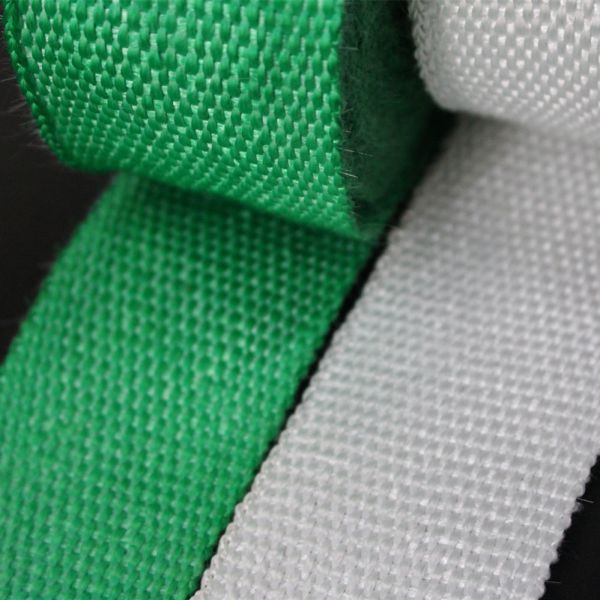
Common retail exhaust-wrap roll lengths include:
15 ft;
25 ft;
50 ft;
100 ft.
Industrial and OEM customers may require longer rolls to reduce joints and packaging waste.
Material consumption depends on:
pipe outside diameter;
pipe length;
wrap width;
overlap;
number of bends;
collector geometry.
A header with multiple primary tubes can require significantly more material than a straight exhaust pipe of similar overall length.
For repeat production, calculating consumption from an actual pipe drawing or physical sample is more reliable than estimating from vehicle type.
Black fiberglass exhaust wrap is frequently selected where appearance is important or where the finished installation should blend into a dark engine compartment.
The black appearance may be created by a coating or treatment applied to the fiberglass structure.
Buyers should distinguish between:
the base fiberglass insulation;
the surface color or coating;
the claimed operating temperature.
Color alone does not determine thermal performance.
When specifying black fiberglass exhaust wrap, ask for the actual material construction and temperature rating rather than assuming every black product has the same properties.
BSTFLEX offers black exhaust thermal protection products within its exhaust wrap product range for applications where both thermal performance and appearance are considerations.
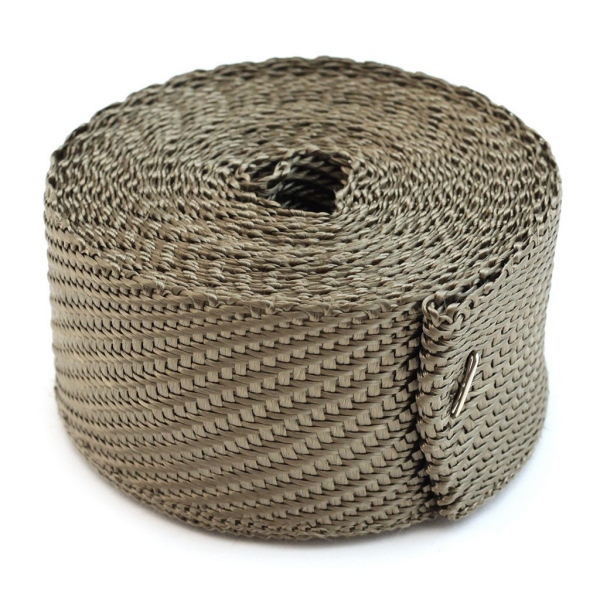
Fiberglass and basalt are both common exhaust insulation materials.
| Factor | Fiberglass Exhaust Wrap | Titanium-Style Wrap |
|---|---|---|
| Base material | Glass fiber | volcanic rock fiber |
| Typical use | General exhaust insulation | Performance and higher-heat applications |
| Cost | Generally lower | Generally higher |
| Flexibility | Good | Good |
| Color options | White, tan, black | Brown, bronze, black |
| Common applications | Headers, pipes, motorcycles | Headers, downpipes, racing, turbo systems |
Fiberglass is often the more economical choice for general exhaust thermal control.
Basalt-based material becomes more relevant when the application involves higher temperatures, repeated thermal cycling or performance exhaust systems.
For a detailed material comparison, BSTFLEX also provides Titanium Exhaust Wrap: Material, Temperature and Applications.
Silica occupies a higher-temperature position in the exhaust insulation range.
Fiberglass is suitable for many general automotive and industrial exhaust applications.
Silica should be considered when:
continuous temperature is significantly higher;
the wrap is located near turbo manifolds;
racing exhaust temperatures are severe;
conventional fiberglass does not provide enough temperature margin.
BSTFLEX manufactures High Temperature Inferno Header Exhaust Heat Wrap for severe-temperature applications where a high-silica construction is more appropriate.
The correct material should be selected from actual operating temperature rather than assuming the highest-temperature material is always necessary.
Fiberglass exhaust heat wrap is used across a broad range of equipment.
Used to control radiant heat around tubular exhaust headers and protect nearby components.
Useful around exposed header pipes and exhaust tubes located close to the rider or body panels.
Suitable where operating temperature remains within the fiberglass material capability.
Used where thermal containment is needed around headers and exhaust tubing.
For more severe turbo applications, basalt or silica may provide a larger temperature margin.
Fiberglass wrap can be used on diesel exhaust pipes where sustained heat and personnel protection are concerns.
Generator exhaust piping can benefit from flexible insulation where nearby equipment or personnel require heat protection.
Fiberglass wrap is also used around smaller industrial exhaust tubes, hot ducts and equipment exhaust lines.
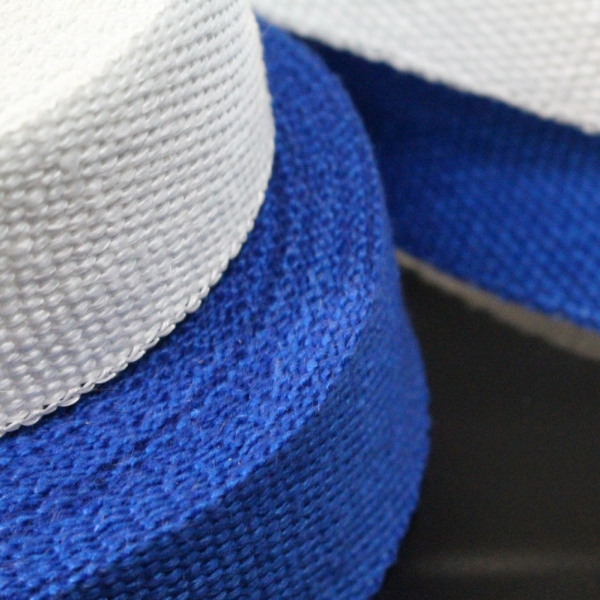
Temperature ratings should be evaluated carefully.
Competitor fiberglass wrap products commonly publish continuous and short-duration temperature limits rather than one single maximum value. Heatshield Products currently rates its Original Fiberglass Exhaust Wrap at 1200°F continuous and 2000°F intermittent, while DEI lists 1200°F direct heat resistance and 2000°F radiant heat resistance for its Glass Fiber Wrap systems.
These competitor values should not be treated as universal fiberglass specifications.
For BSTFLEX sourcing, buyers should confirm:
continuous operating temperature;
peak temperature;
whether the value is direct, radiant or intermittent;
coating limitations;
installation environment.
Different fiberglass constructions can have different temperature capabilities.
Fiberglass exhaust wrap is normally installed with consistent overlap between turns.
Overlap affects:
thermal coverage;
finished thickness;
material consumption;
installation stability.
Some commercial systems use guide lines or recommend a specific overlap dimension. DEI, for example, provides wrap products with installation guidance and currently uses a 0.25-inch recommended overlap in its exhaust-wrap calculator.
That does not mean every wrap must use the same overlap.
BSTFLEX customers should follow the installation specification supplied for the selected product and application.
Exhaust wrap must be secured so that it cannot unwind during vibration and repeated heat cycles.
Common fastening methods include:
stainless steel locking ties;
stainless steel wire;
metal clamps;
application-specific fixing bands.
Stainless steel ties are widely used because they tolerate exhaust temperatures better than ordinary plastic cable ties.
For OEM kits, exhaust wrap and stainless-steel fixing ties can be packaged together according to project requirements.
Some installers lightly wet fiberglass wrap before installation to make the woven tape temporarily easier to handle around bends.
However, this is not a universal requirement.
Whether pre-wetting is appropriate depends on:
weave;
coating;
product construction;
installation instructions.
Do not assume that all fiberglass exhaust wrap should be soaked.
Follow the instructions for the specific product.
Generally, a flexible exhaust joint should not automatically be treated like a rigid exhaust pipe.
Flex sections move during engine vibration and thermal expansion.
Wrapping over a flex joint can restrict movement or cause the wrap to wear prematurely.
DEI specifically cautions users against wrapping flex pipes and flex joints with its Glass Fiber Wrap.
Where thermal protection around a flex joint is required, a separate shield, sleeve or removable insulation solution may be more suitable.
Catalytic converters already operate at high internal temperatures.
Adding direct insulation can increase retained heat.
DEI specifically advises against wrapping catalytic converters because excessive retained temperature may reduce converter life.
A separate heat shield is generally a better solution when the objective is to protect the floor, tunnel or nearby components from catalytic-converter heat.
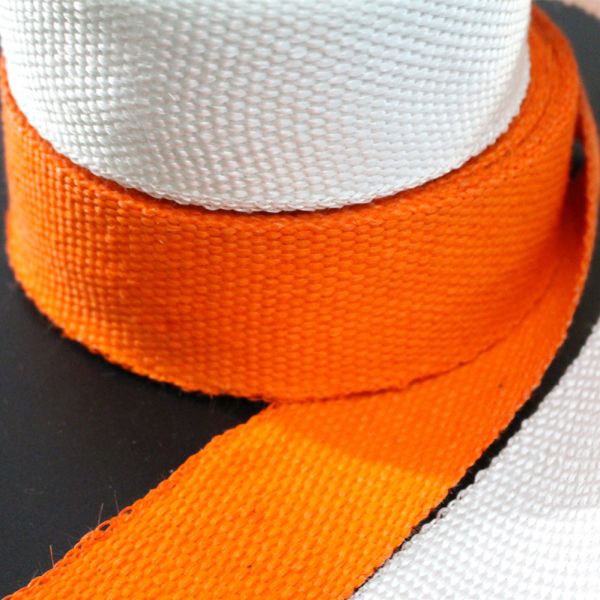
For a repeatable calculation, four inputs are required:
pipe outside diameter;
total pipe length;
wrap width;
overlap.
Bends and collectors increase material consumption.
This is why exhaust-wrap calculators used by current competitors ask for pipe OD, pipe length, wrap width and overlap rather than only vehicle model. DEI currently uses exactly these variables in its product-page calculator.
For OEM exhaust assemblies, BSTFLEX can calculate approximate material usage from drawings, dimensions or physical samples.
Retail and aftermarket customers often prefer complete installation kits.
A typical exhaust wrap kit may include:
fiberglass exhaust wrap;
stainless steel locking ties;
installation instructions;
optional coating or finishing products.
Heatshield Products and DEI both currently market fiberglass exhaust wrap kits that combine wrap with metal ties and related installation components.
For private-label and distribution projects, BSTFLEX can support custom kit configurations and packaging based on required roll sizes and accessory combinations.
For a quotation, provide as much of the following information as possible:
fiberglass wrap width;
roll length;
thickness;
color;
operating temperature;
exhaust pipe diameter;
application;
required quantity;
packaging format;
accessories required.
For OEM projects, drawings or pipe dimensions are particularly useful when calculating roll consumption.
BSTFLEX manufactures high-temperature textile products for automotive and industrial thermal management.
For fiberglass exhaust wrap projects, supply options may include:
custom widths;
custom roll lengths;
black or natural-color configurations;
bulk rolls;
stainless steel tie kits;
retail exhaust wrap kits;
private-label packaging;
distributor packaging;
OEM supply.
This allows the product to be specified for production requirements rather than being limited to fixed retail roll sizes.
View the complete BSTFLEX Exhaust and Header Heat Wrap range for fiberglass, basalt, silica and other exhaust thermal insulation products.
Fiberglass exhaust wrap is a woven high-temperature glass-fiber tape installed directly around exhaust pipes and headers to reduce heat transfer toward surrounding components.
Yes. Headers are one of the most common applications because narrow fiberglass tape can follow tubular primary pipes and collectors.
Neither is universally better. One-inch wrap is easier around small pipes and tight bends, while two-inch wrap generally covers larger or straighter tubing faster.
Black fiberglass exhaust wrap is fiberglass-based thermal insulation with a dark surface treatment or coating. Buyers should verify the underlying fiber, coating and temperature rating.
Fiberglass is usually a practical and economical general-purpose option. Basalt-based titanium-style wrap is often selected for higher-temperature or performance applications.
No. Standard fiberglass exhaust wrap is intended for thermal insulation, not structural exhaust repair or leak sealing.
Yes. OEM and distributor projects can be specified around width, roll length, packaging, accessories and quantity requirements.

No.10, Chuangxin North Road, Nanshan Park, Ningguo Economic and Technological Development Zone, Ningguo City, Anhui Province, China
тел/Whatsapp : 0086-15856303740
Эл. адрес : sales@bstbraidedsleeve.com
Skype : vanesa-cheng