что ты ищешь?

A stainless steel heat shield blank can match its flat drawing and still need rework after forming. A flange may sit too high, a hole may miss its bracket, or an unfinished edge may face the wiring the shield is supposed to protect. These problems belong in the fabrication plan, before the first production batch is cut.
When working with stainless steel heat shield foil, develop the blank, forming sequence and edge treatment together. Qualify the cutting method on the actual embossed material, check the shape after releasing it from the tooling, and inspect the attachment areas in the finished condition.
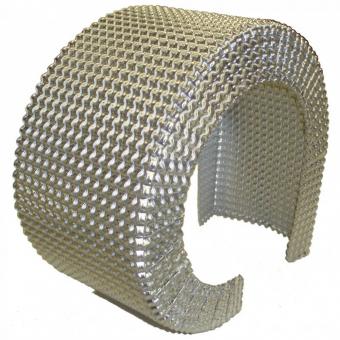
BSTFLEX supplies embossed stainless steel heat shield material for cutting, folding, stamping and custom fabrication. The following guide focuses on turning that sheet into a repeatable part rather than comparing stainless steel with other metals.
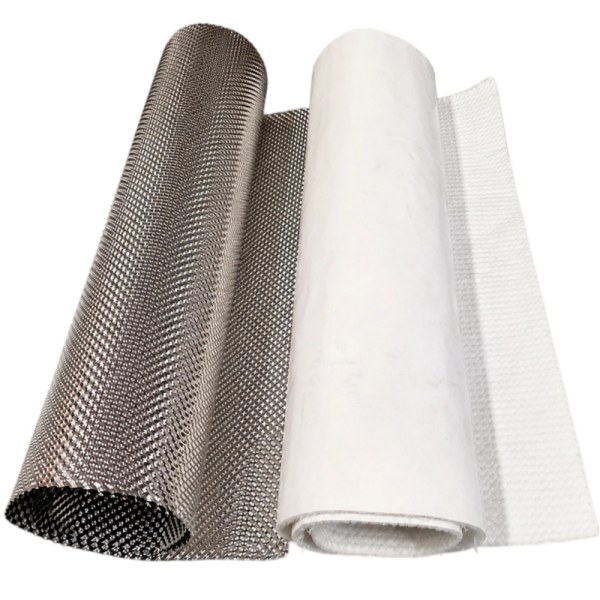
Use the specified stainless grade, supply condition, base-metal thickness and embossing pattern for the forming trial. A convenient offcut is useful for checking a rough outline, but it should not become the approval sample for a different production material.
BSTFLEX lists 0.1 mm, 0.15 mm and 0.2 mm among its stainless heat shield sheet options. Keep base-metal gauge separate from the overall height of the embossed profile. For the thickness decision itself, see how to choose thickness for embossed stainless steel heat shield sheets.
Mark the intended heat-source side and the pattern orientation on the trial blank. Use the same references when comparing samples so that a change in orientation is not mistaken for a change in material quality.
The visible outline of an installed shield is not its flat cutting pattern. Curves, flanges, folded edges and mounting tabs all need material that may not appear in a front-view photograph.
For a curved exhaust shield, establish the required profile independently of the pipe surface. A template pressed directly against the pipe does not include a designed stand-off. Make the intended separation part of the drawing before developing the blank.
As a simple geometry check, a 180-degree arc at a 40 mm reference radius has an arc length of approximately 125.7 mm. That is the arc alone, not an approved blank width. Edge returns, bend allowances, tabs and trimming must still be considered, and the developed pattern must be checked in a forming trial.
For a shield with compound curvature, use a formed sample or a suitable development method rather than assuming that a rectangular strip can reproduce the entire surface. Agree where seams or separate sections are permitted before cutting material.
Select a cutting process that can hold and cut the specified thin stainless material without unacceptable damage. For a prototype, assess a suitable thin-sheet shearing method. Repeat production may justify dedicated blanking tooling or a qualified laser-cutting process. Confirm the proposed route with the fabricator rather than treating these methods as interchangeable.
Laser cutting uses localized thermal energy. When evaluating it for a thin embossed blank, include edge condition and distortion in the trial inspection; do not approve the process from outline accuracy alone.
Support the blank and control the offcut during cutting. Inspect both sides of the finished edge for burrs, tears, unwanted creases and damage to narrow tabs. Set acceptance limits before the trial, including which edges will receive further finishing.
Inside corners deserve particular attention. Sharp notches can raise local stress, so use the drawing's specified corner radii or relief features rather than leaving an uncontrolled slit termination. This is especially important where the feature sits near a mounting tab or another repeatedly loaded area.
Use equipment and handling protection appropriate to sharp sheet metal. Remove loose slivers before moving the blank to the forming or assembly station.
Stainless steel can spring back after bending, and the response changes with grade, thickness and material condition. Check the part after unloading. A profile that matches a fixture only while it is clamped has not demonstrated the required free-state geometry.
Establish tooling and compensation through a representative trial. Do not apply a universal minimum bend radius or overbend angle to every embossed foil. The selected material and finished feature must be evaluated together.
Support broad curved areas with tooling suited to the intended profile. At a bend line, decide whether local flattening of the embossed pattern is acceptable and how that area will be inspected. Distinguish an intentional tooling contact area from accidental crushing elsewhere on the panel.
Austenitic stainless steels work-harden during cold deformation. Avoid repeatedly bending the same trial part backward and forward to obtain the desired fit. Once an adjustment is established, prove it on a fresh blank made through the intended sequence.
A hole can be correct in the flat blank yet sit in the wrong position after the surrounding material is formed. Define whether its critical location is measured in the flat or finished condition.
Where a hole is made before forming, verify its position and shape afterward. Where it is made later, provide a reliable way to locate and support the formed part. Neither sequence should be approved without checking access and repeatability.
For flanged holes, cut-edge quality and previous cold work affect the risk of edge cracking. Examine the actual formed feature rather than approving it from the original hole diameter alone.
Show any specified reinforcement, washer contact area or separate mounting bracket in the assembly drawing. Do not use the fastener to force a poorly formed tab into alignment during the acceptance check.
An edge treatment changes the part geometry and may require additional blank material. Choose it before finalizing the cut outline, particularly where the shield borders a hose, harness or service-access area.
| Edge Detail | What to Define | What to Check on the Sample |
|---|---|---|
| Trimmed and deburred edge | Finished outline, permissible burr and required edge condition | No loose slivers or unacceptable sharp features; dimensions remain within the drawing limits |
| Returned flange | Flange height, direction and inside radius | The return clears adjacent parts and does not interfere with installation or removal |
| Folded or hemmed edge | Open or closed detail, fold allowance and finished envelope | The fold meets the specified profile without cracking or reducing required clearance |
Folding an edge back can provide edge protection and increase local stability. It is not automatically the right treatment for every foil or geometry. Review the fold with the selected material and tooling, and inspect the result rather than assuming that closing the edge makes it acceptable.
During deburring, support the thin material and avoid removing more metal than the approved process permits. The objective is the specified edge condition, not a heavily rounded appearance that changes the part dimensions.
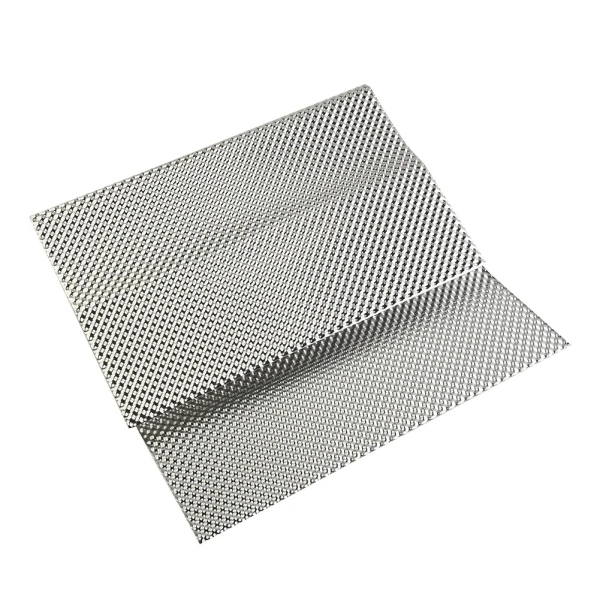
The outline fits, but the mounting holes do not. Compare the flat-pattern datums with the formed-part datums. Review bend locations and the hole-making sequence before enlarging holes to make the sample fit.
A crack appears beside a cut feature. Inspect the original edge, local radius and forming history. A thicker sheet is not a diagnosis; establish whether cutting damage, geometry or the forming operation contributed to the problem.
The shield fits before the edge is folded, but not afterward. Recheck the edge allowance and finished envelope. Keep both an intermediate inspection and a final inspection when the edge operation changes a critical dimension.
The part matches the fixture but moves when released. Review the free-state shape and forming compensation. Define the permitted assembly restraint instead of relying on undocumented clamping force.
Keep the approved sample with the material specification, blank revision and forming sequence. Record the cutting method, tooling references, edge treatment and inspection datums that produced it.
For production approval, check more than a single hand-adjusted sample. Use the agreed trial quantity and acceptance plan to evaluate repeatability. If a material or process change is proposed, identify which features require renewed review.
Fabrication approval and thermal approval serve different purposes. The former establishes that the part can be made to its specification. The latter checks whether the installed shield provides the required protection under the specified duty. A neat, dimensionally correct panel is not a substitute for the relevant thermal and durability tests.
Yes. BSTFLEX offers formable embossed stainless steel sheet for these operations. Qualify the cutting and forming method for the chosen gauge, pattern and part geometry rather than assuming that every thin-sheet process will give the same result.
Use the sequence that meets the finished-part requirements reliably. Pre-cut holes need checking after forming; holes made later require accurate location and support of the shaped part.
No. Specify the edge according to handling, adjacent components, available space and manufacturability. A hem is one option, not a universal requirement.
It can support a preliminary fit review, but production approval should address the actual manufacturing route. Record the limits of the prototype evaluation and test the proposed production process separately.
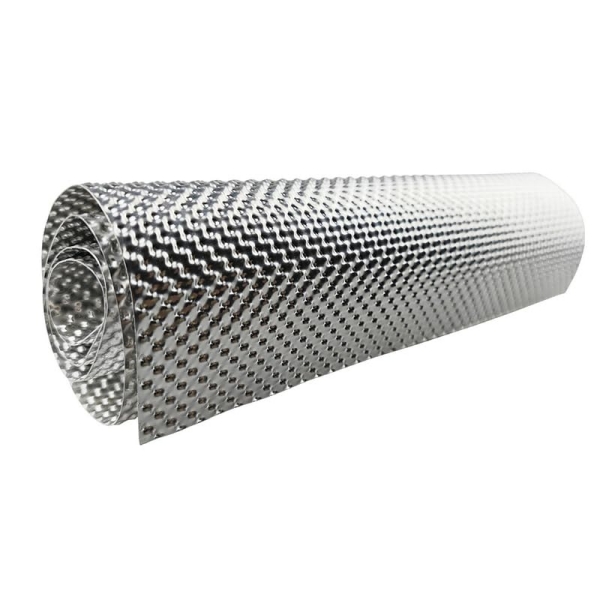
BSTFLEX supplies stainless steel thermal barrier sheet with existing and custom embossing options. Sheet supply and drawing-based parts can be discussed for the required project scope.
Send the flat blank and finished-part drawings where available, together with the stainless grade, gauge, pattern reference and sample quantity. Mark critical bends, attachment areas and edge details so they are included in the review.
Submit your heat shield drawing to BSTFLEX for a material and fabrication inquiry. State whether you need sheet for your own workshop, cut blanks or a finished formed component.

No.10, Chuangxin North Road, Nanshan Park, Ningguo Economic and Technological Development Zone, Ningguo City, Anhui Province, China
тел/Whatsapp : 0086-15856303740
Эл. адрес : sales@bstbraidedsleeve.com
Skype : vanesa-cheng