что ты ищешь?
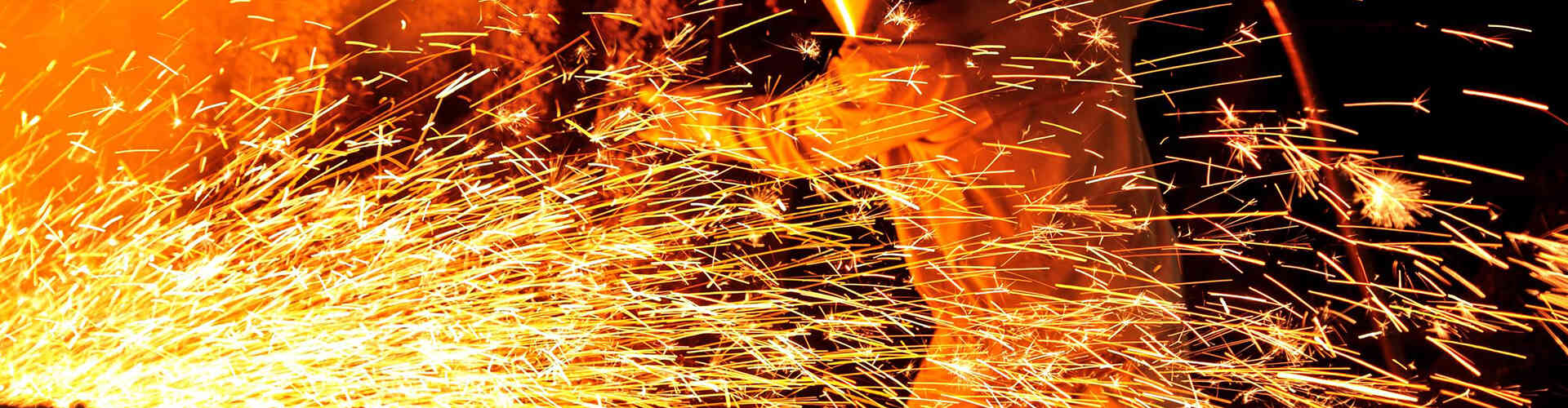
Внутри глушителя абсорбционного типа перфорированный сердечник является лишь частью акустической системы. Материал, окружающий этот сердечник, оказывает непосредственное влияние на уровень шума выхлопных газов, качество звука, термостойкость, срок службы наполнителя и долговременное состояние глушителя.
Этот материал обычно известен какнабивка глушителя.
В зависимости от конструкции выхлопной системы и рынка, один и тот же компонент может также называться следующим образом:наполнитель глушителя,набивка глушителя выхлопной системы, наполнитель глушителя, уплотнительный материал для выхлопной системы, акустический наполнитель, глушительная вата или демпфирующий материал для выхлопной системы.
Компания BSTFLEX занимается поставкой и разработкой высокотемпературных наполнителей для глушителей мотоциклов, автомобильных выхлопных систем, гоночных глушителей, промышленных глушителей, генераторов и других выхлопных систем.
Ознакомьтесь с полным ассортиментомнабивка глушителя.
Типичный глушитель с абсорбционным эффектом имеет относительно простую конструкцию:
Поток отработавших газов → перфорированная трубка → защитный волокнистый слой → звукоизолирующая прокладка → наружная оболочка
Выхлопные газы проходят через перфорированный сердечник. Акустическая энергия передается через перфорации и проникает в окружающий волокнистый материал.
Вместо того чтобы полагаться только на камеры или ограничивающие перегородки, наполнитель преобразует часть этой акустической энергии в очень небольшое количество тепла за счет трения внутри волоконной структуры.
Для того чтобы система продолжала работать, упаковка должна оставаться на месте:
термостойкий,
достаточно устойчивый,
устойчив к эрозии, вызванной импульсами выхлопных газов.
правильно упаковано вокруг сердцевины,
и способный сохранять свою волокнистую структуру после многократного нагревания и охлаждения.
Именно поэтому выбор наполнителя глушителя, основываясь только на температурном диапазоне, редко бывает достаточным.
Набивка глушителя выполняет несколько задач одновременно.
Открытая волокнистая структура поглощает звуковую энергию, генерируемую импульсами выхлопных газов. Это особенно важно для прямоточных и высокоэффективных глушителей, где поток газа проходит через перфорированную центральную трубу.
Состояние упаковки может влиять не только на звуковое давление, но и на тон выхлопных газов.
Как правило, новая набивка обеспечивает более контролируемый, менее металлический звук выхлопа. По мере износа, сжатия, миграции или исчезновения волокон звук глушителя может заметно ухудшиться и стать громче.
Уплотнительный слой обеспечивает разделение между горячей перфорированной трубой и корпусом глушителя.
Хотя наполнитель глушителя в первую очередь является акустическим материалом, его тепловые характеристики влияют на температуру корпуса и долговечность прилегающих компонентов.
Надежная набивка снижает прямую акустическую и тепловую нагрузку на внешний корпус. Хорошо спроектированная система набивки также может уменьшить износ глушителя, вызванный вибрацией.
Не существует единого материала для набивки глушителя, идеально подходящего для любой выхлопной системы.
Температура, скорость потока газа, тип двигателя, ожидаемый интервал технического обслуживания, целевой уровень звука, геометрия глушителя и метод изготовления — все это влияет на выбор материала.
Стекловолокно остается одним из наиболее широко используемых материалов в абсорбционных глушителях.
Он сочетает в себе низкую объемную плотность с большой площадью поверхности волокна, что обеспечивает хорошее звукопоглощение без чрезмерного увеличения веса.
Типичные формы включают:
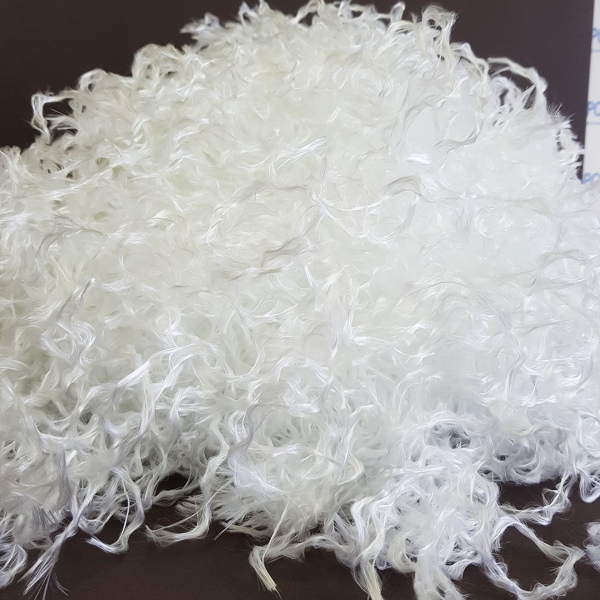
рыхлая стекловолоконная пряжа,
непрерывное волокно из стекловолокна,
текстурированное стекловолокно,
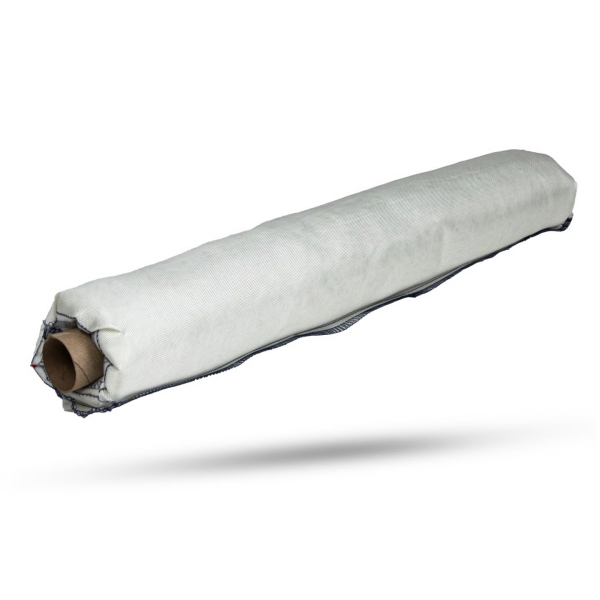
стекловолоконные маты,
Упаковочные подушки из стекловолокна,
предварительно сформированные упаковочные мешки,
и стекловолокно, заключенное в тканые сетчатые мешки.
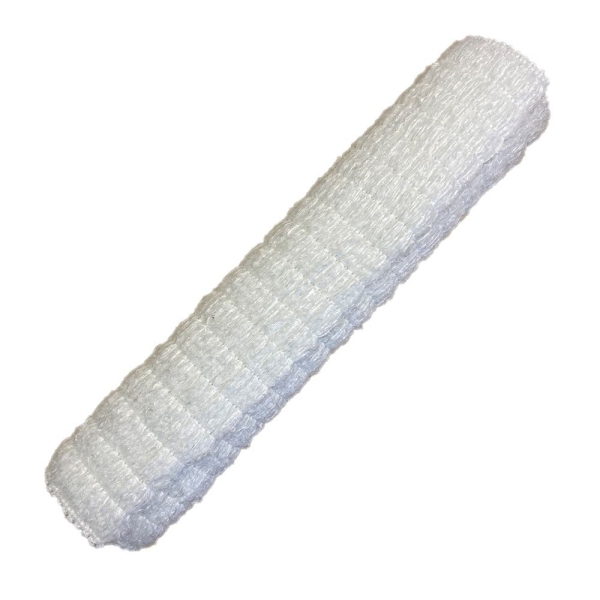
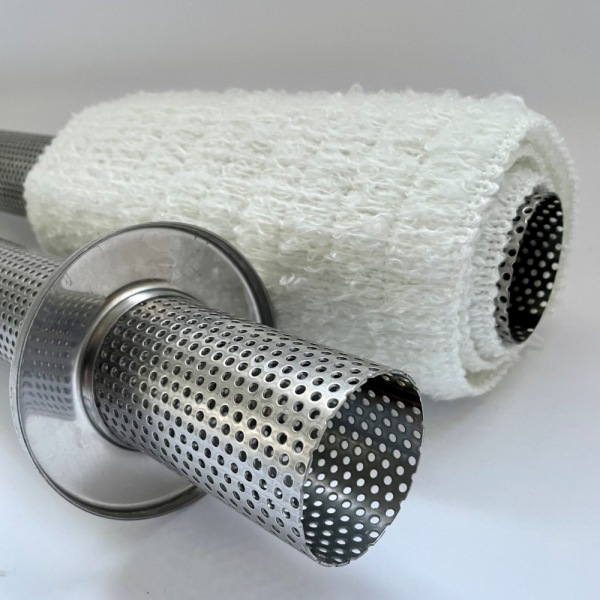
Компания BSTFLEX производитУпаковочный мешок для стекловолоконного глушителя из плетеной стекловолоконной сеткидля применений, где предпочтительнее контролируемая установка и удержание волокна, чем свободная засыпка.
Наполнитель из стекловолокна обычно выбирают в следующих случаях:
мотоциклетные глушители,
Глушители для квадроциклов и мотовездеходов.
автомобильные выхлопные системы для повышения производительности,
сменные глушители,
гоночные выхлопные системы,
а также множество глушителей абсорбционного типа, выпускаемых производителями оригинального оборудования.
Главное преимущество заключается в сбалансированном соотношении акустической эффективности, веса, технологичности производства и стоимости.
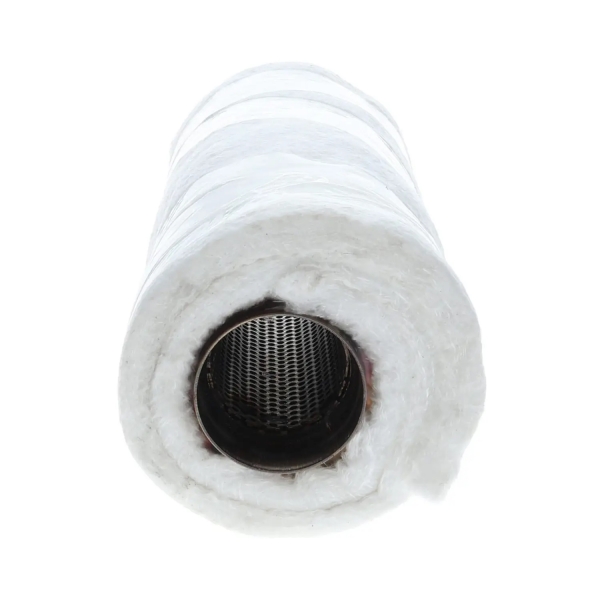
Вата из нержавеющей стали выполняет несколько иную функцию.
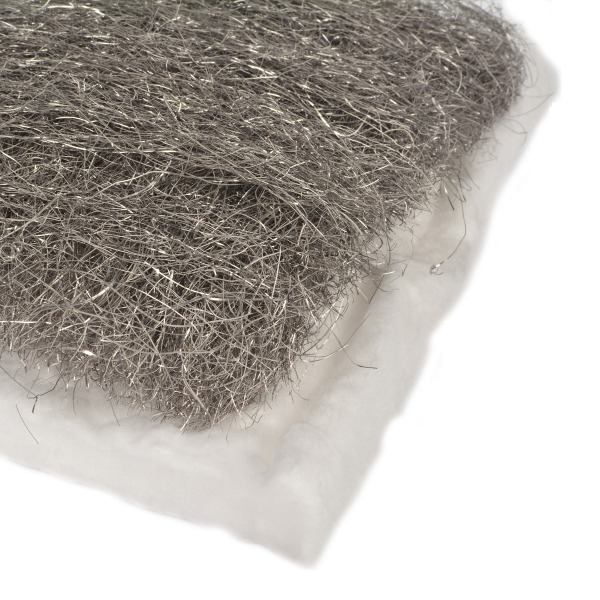
Его можно использовать в качестве наполнителя, но во многих высокоэффективных выхлопных системах он устанавливается непосредственно вокруг перфорированной трубы в качестве защитного слоя.
Типичная схема выглядит следующим образом:
Перфорированный сердечник → стальная вата → стекловолоконная набивка → корпус глушителя
Слой из нержавеющей стали помогает защитить более мягкие акустические волокна от:
очень горячие выхлопные газы,
высокоскоростные импульсы,
турбулентность вокруг перфораций,
Воздействие пламени,
и постепенное выдувание волокон.
Такая конструкция особенно полезна в сложных выхлопных системах мотоциклов, гоночных автомобилей, а также в системах с турбонаддувом и высокой мощностью.
Поэтому сравнение стекловолокна и нержавеющей стальной ваты как единственного подходящего материала иногда вводит в заблуждение. Во многих глушителях они выполняют взаимодополняющие функции.
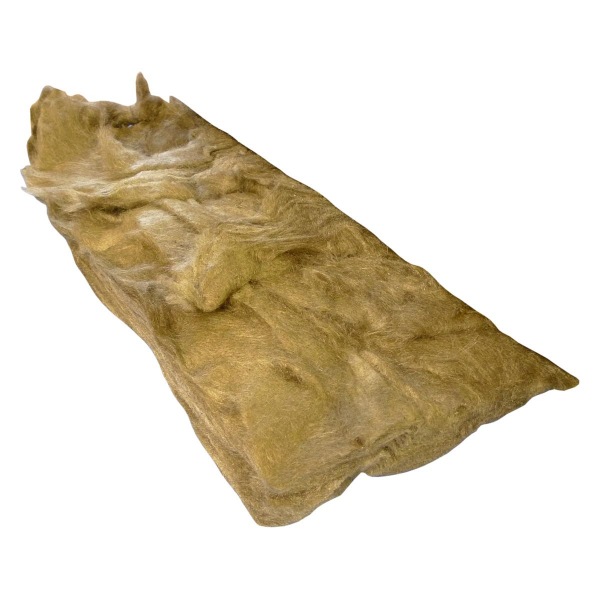
В случаях, когда температура выхлопных газов необычно высока, может быть рассмотрено применение керамического волокна.
Наполнитель глушителей из керамического волокна привлекателен благодаря своей способности выдерживать высокие температуры и относительно низкой теплопроводности.
Возможные области применения включают:
high-temperature industrial silencers,
heavy-duty engine exhaust systems,
certain generator exhaust assemblies,
thermal-intensive exhaust equipment,
and special mufflers operating beyond the practical range of conventional glass fiber.
However, the highest temperature material is not automatically the best acoustic material.
Density, fiber diameter, resilience, vibration resistance, handling requirements, and long-term fiber stability must also be evaluated.
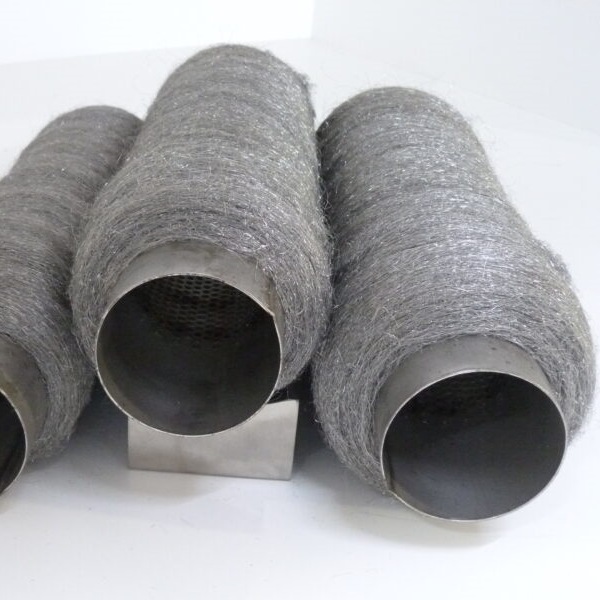
Basalt fiber provides another option between conventional glass fiber and more specialized high-temperature materials.
Produced from volcanic basalt rock, continuous basalt fibers can provide:
good thermal resistance,
mechanical stability,
chemical resistance,
vibration resistance,
and useful acoustic performance.
Basalt muffler packing can therefore be considered for automotive, motorcycle, heavy-duty, or industrial exhaust systems where designers want a mineral-fiber solution with elevated thermal capability.
| Packing Material | Primary Strength | Typical Position | Suitable Applications |
|---|---|---|---|
| Fiberglass | Efficient acoustic absorption | Main packing layer | Motorcycle, automotive, performance exhaust |
| Stainless Steel Wool | Heat and erosion protection | Around perforated core or as metallic packing | Racing, turbo, high gas velocity exhaust |
| Ceramic Fiber | Extreme-temperature capability | Main or supplementary insulation layer | Industrial and severe-temperature silencers |
| Basalt Fiber | Thermal and mechanical durability | Main acoustic packing layer | Heavy-duty, automotive and industrial exhaust |
The correct construction may combine two or more materials rather than using a single fiber throughout the silencer.
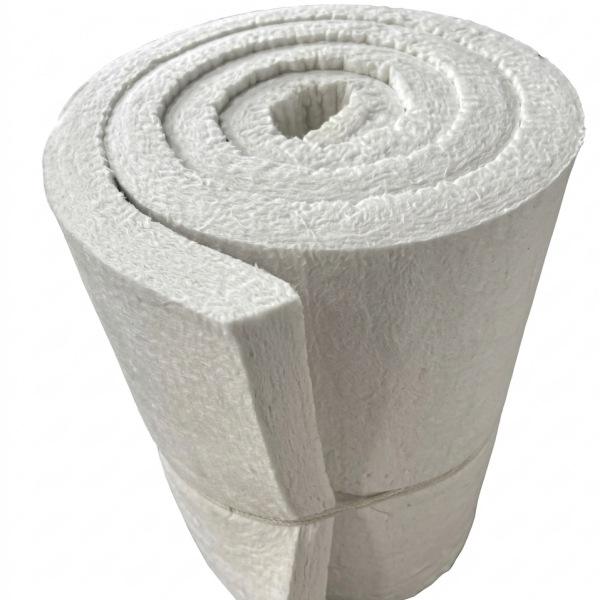
Two mufflers using exactly the same fiber can perform differently simply because the material was installed at different densities.
This is one of the most overlooked aspects of exhaust muffler packing.
If the fiber mass is insufficient, several problems can develop:
reduced acoustic absorption,
rapid fiber movement,
localized empty areas,
increased exhaust noise,
accelerated blowout.
The fibers may also redistribute under vibration and exhaust pulsation.
Over-compression creates another set of problems.
When fibrous material is compressed excessively, the void structure needed for acoustic energy dissipation changes.
The result can be:
poorer sound absorption in certain frequency ranges,
increased silencer weight,
difficult assembly,
reduced fiber resilience,
and unnecessary material consumption.
The goal is therefore not to put the maximum possible amount of packing inside the muffler.
The objective is to achieve a controlled and repeatable packing density suitable for the muffler geometry and target acoustic performance.
Muffler packing works in one of the harshest environments on a vehicle.
The material may experience thousands of heating and cooling cycles together with vibration and rapidly fluctuating exhaust pressure.
Several deterioration mechanisms can occur.
High-velocity exhaust gases passing through perforations gradually attack exposed fibers.
This is often called fiber blowout.
Continuous exposure to elevated temperature can reduce fiber resilience and alter the packing structure.
Vibration can cause loose packing to migrate or compact.
The silencer may develop areas with insufficient material even when the total amount of packing originally installed was correct.
Condensation, oil residue, incomplete combustion products, and other deposits can affect the condition of the acoustic fibers.
A theoretically suitable material may still fail prematurely if it is packed unevenly or installed at the wrong density.
Muffler packing deterioration is not always visible from outside the silencer.
Several operating changes can indicate that the material should be inspected.
Common signs include:
A noticeable increase in exhaust volume
The muffler gradually becomes louder because the effective acoustic mass has decreased.
A sharper or metallic exhaust note
When the packing layer becomes thin, sound energy interacts more directly with the metal shell.
Fibers coming from the tailpipe
Visible strands or particles at the outlet may indicate packing migration or blowout.
Hot spots on the muffler casing
Loss or movement of the internal packing can create uneven thermal distribution.
Rattling or internal movement
This can indicate loose material or deterioration of internal components.
Motorcycle silencers place especially high demands on packing material because the available volume is limited while exhaust temperatures and pulse velocity can be high.
For this reason, motorcycle exhaust packing normally needs to combine:
strong acoustic absorption,
low weight,
good thermal stability,
resistance to vibration,
easy repacking,
and controlled fiber retention.
Both two-stroke and four-stroke engines use packed silencers, but their operating environments differ considerably.
Two-stroke exhaust packing can be affected heavily by oil, combustion residue, and frequent repacking cycles.
Four-stroke performance exhausts may expose the material to higher sustained temperatures and aggressive exhaust pulses.
Selecting packing purely by motorcycle type is therefore insufficient. Muffler construction and engine operating conditions should also be considered.
Performance exhaust manufacturers often need to reduce sound without introducing excessive backpressure.
Straight-through absorption mufflers are useful in this situation because the exhaust path remains relatively open.
The acoustic packing surrounding the perforated core becomes a critical component.
Depending on the application, manufacturers may specify:
continuous fiberglass packing,
stainless steel wool core protection,
composite stainless/fiberglass systems,
basalt fiber,
or specialized high-temperature fibers.
For racing exhaust systems, packing retention becomes particularly important because high gas velocities can rapidly damage exposed loose fibers.
Industrial silencers operate under a different set of requirements.
Applications can include:
diesel generators,
gas engines,
compressors,
turbines,
exhaust treatment equipment,
heavy machinery,
power generation systems,
and industrial ventilation or acoustic control systems.
In these installations, designers may prioritize:
continuous operating temperature,
acoustic absorption over a specified frequency range,
long maintenance intervals,
fiber stability,
corrosion resistance,
and repeatable packing density.
Industrial buyers therefore often purchase muffler packing by engineering specification rather than simply selecting a consumer repacking kit.
Manufacturers normally have several ways to introduce fiber into a silencer.
Loose fibers or strands allow considerable flexibility during assembly.
They work well where the muffler geometry varies or packing is performed manually.
The challenge is maintaining consistent density from one muffler to another.
Mats provide more predictable thickness and make material handling easier during production.
They are especially suitable when the silencer has a regular cylindrical geometry.
A measured amount of fiber is enclosed inside a lightweight retaining fabric or mesh.
This allows manufacturers to control fiber mass before installation.
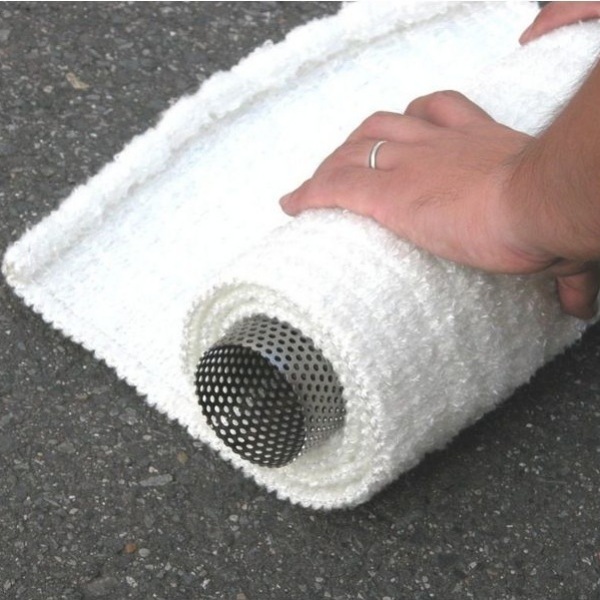
A tubular packing assembly can be fitted around the perforated core, reducing installation time and helping maintain circumferential coverage.
BSTFLEX develops customized packing formats including fiberglass-based assemblies for OEM exhaust production.
A purchase specification should contain more information than simply:
“Fiberglass muffler packing.”
For repeatable production, buyers should consider supplying:
| Specification Item | Why It Matters |
|---|---|
| Fiber material | Determines thermal and mechanical behavior |
| Silencer internal diameter | Defines available packing space |
| Perforated core diameter | Determines required packing thickness |
| Muffler length | Determines fiber quantity |
| Target packing density | Influences acoustic performance |
| Continuous exhaust temperature | Determines material suitability |
| Peak temperature | Identifies short-duration thermal exposure |
| Engine type | Helps evaluate exhaust environment |
| Packing format | Loose fiber, mat, pillow, sock or custom assembly |
| Annual quantity | Determines manufacturing and packaging method |
When these parameters are available, the packing can be engineered around the silencer rather than supplied as a generic bulk fiber.
Manual loose packing creates several variables.
One operator may install more material than another. Distribution around the perforated tube may also vary.
Preformed systems reduce this variability.
A packing sock, bag, pillow, or measured mat can provide:
defined material weight,
more uniform circumferential distribution,
reduced fiber handling,
shorter assembly time,
cleaner production,
improved batch repeatability.
For medium- and high-volume exhaust manufacturing, those manufacturing benefits can be as important as the thermal properties of the fiber itself.
A practical starting point is to identify the dominant failure risk.
Consider fiberglass as the primary acoustic layer.
Consider a stainless steel wool or metallic mesh protection layer before the main fiber packing.
Evaluate ceramic or other elevated-temperature fibers.
Consider materials and packing forms with stronger dimensional stability and controlled retention.
Consider preformed socks, pillows, mats, or custom packing assemblies rather than uncontrolled loose fill.
BSTFLEX manufactures high-temperature thermal and acoustic materials for exhaust systems and can support both replacement packing and OEM silencer production.
Available development options can include:
fiberglass muffler packing,
glass fiber silencer packing,
stainless steel wool packing,
ceramic fiber packing,
basalt-based packing,
loose fiber,
mats,
rolls,
packing bags,
packing pillows,
tubular packing socks,
and customized preformed assemblies.
Sizes, packing weight, fiber combination, retaining construction, and packaging can be developed according to customer drawings, samples, or silencer dimensions.
For applications requiring easier assembly and improved fiber containment, see theFiberglass Muffler Packing Sock with Woven Glass Mesh Bag.
For additional material options, visit theBSTFLEX Muffler Packing category.
There is no universal best material. Fiberglass is widely used because of its acoustic efficiency and weight, stainless steel wool is effective for protecting packing near the perforated core, while ceramic and basalt fibers may be selected where higher temperature capability is required.
Yes. Fiberglass is one of the most common acoustic materials used in absorption-type exhaust silencers because its fibrous structure provides efficient sound absorption while remaining relatively lightweight.
It can be used alone in some designs, but stainless steel wool and fiberglass often perform different functions. Stainless steel wool can protect the inner packing from exhaust erosion, while fiberglass provides the principal acoustic absorption layer.
Packing can escape because of fiber erosion, excessive gas velocity, damaged retaining mesh, incorrect packing density, thermal degradation, or deterioration around the perforated core.
Not necessarily. Excessive compression can reduce the open fiber structure needed for effective acoustic absorption. Packing density should be controlled rather than maximized.
There is no fixed interval for every exhaust system. Replacement frequency depends on exhaust temperature, engine type, riding conditions, packing material, gas velocity, silencer design, and operating hours.
Да. Уплотнение OEM может поставляться в соответствии с диаметром сердечника, диаметром корпуса, длиной глушителя, целевым весом уплотнения, спецификацией материала, температурными требованиями и предпочтительным способом установки.
При проектировании выхлопной системы основное внимание часто уделяется видимой оболочке глушителя, однако материал, скрытый между этой оболочкой и перфорированным сердечником, в значительной степени определяет акустические характеристики глушителя.
Правильно спроектированныйнаполнитель глушителяне должны просто так выдерживать высокую температуру.
Необходимо поддерживать правильное соотношение между структурой волокна, плотностью, звукопоглощением, устойчивостью к эрозии и стабильностью монтажа.
Для стандартных глушителей мотоциклов и автомобилей стекловолокно остается одним из наиболее универсальных вариантов. В сложных условиях эксплуатации выхлопных систем для увеличения срока службы можно использовать нержавеющую стальную вату, керамическое волокно, базальтовое волокно или многослойные комбинации.
Для производителей выхлопных систем, работающих по контракту, следующий шаг — это не просто выбор волокна.
Это определение правильногосистема набивки глушителя выхлопных газовдля геометрии глушителя, температуры выхлопных газов, акустического целевого параметра и метода производства.
Компания BSTFLEX может производить и изготавливать на заказ наполнители для глушителей мотоциклетных, автомобильных, гоночных, генераторных, морских и промышленных выхлопных систем.
Для подбора материала и разработки образцов свяжитесь с компанией BSTFLEX, указав размеры глушителя, рабочую температуру, требуемый формат упаковки и годовой объем производства.

No.10, Chuangxin North Road, Nanshan Park, Ningguo Economic and Technological Development Zone, Ningguo City, Anhui Province, China
тел/Whatsapp : 0086-15856303740
Эл. адрес : sales@bstbraidedsleeve.com
Skype : vanesa-cheng